
When schools don’t see the problem, it can make a mother question everything. Not because her instincts suddenly disappeared, but because the system has a way of sounding confident while being incomplete.
You sit in the meeting. You hear the words. “Academically, your child is doing fine.”
“We’re not observing concerns at school.”
“We don’t really see a problem.”
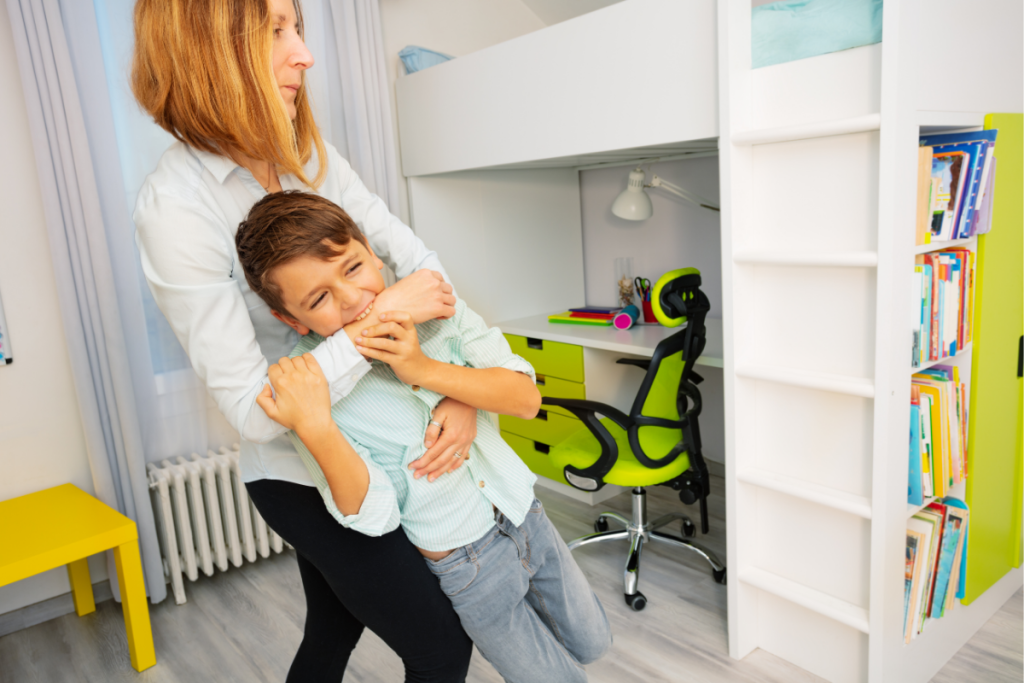
And yet, you go home to a child who collapses, melts down, shuts down, or falls apart in ways the classroom never witnesses.
When schools don’t see the problem, the burden of proof quietly shifts to the parent. And that shift is where damage begins.

What It Really Means When Schools Don’t See the Problem
Let’s strip the phrase of its politeness.
When schools don’t see the problem, they are not making a neutral observation. They are making a determination based on limited data, narrow definitions, and institutional constraints.
In most cases, it means one or more of the following.
The child is coping just well enough to avoid disruption
Many neurodivergent children learn early that survival depends on compliance. They hold it together during the school day and unravel afterward.
Schools don’t see the problem because the problem has been postponed.
The school’s data doesn’t measure internal struggle
Schools measure what they can observe. Anxiety, sensory overload, masking all day and falling apart at home, and emotional exhaustion rarely register on standardized tools.
If a child is quiet, polite, and passing tests, schools often conclude there is no problem to see.
Acknowledging the problem would require action
When schools don’t see the problem, they are also saying they don’t see a need for evaluations, services, or accommodations.
Seeing the problem creates responsibility. Not seeing it preserves the status quo.
Why Mothers Feel Gaslit When Schools Don’t See the Problem
This is not just frustrating. It is destabilizing.
Mothers are told to trust professionals, trust the system, trust the data. But when lived reality contradicts institutional conclusions, doubt creeps in.
Am I imagining this?
Am I overreacting?
Why does no one else see what I see?
When schools don’t see the problem, mothers often start questioning themselves instead of questioning the process. That doubt benefits the system, not the child.

Schools Don’t See the Problem Because They Aren’t Looking Where It Lives
Here’s the uncomfortable truth: many school struggles do not show up in classrooms.
They show up:
- After school, when the child is safe enough to fall apart
- At night, when anxiety disrupts sleep
- On weekends, when routines disappear
- At home, where the cost of masking is finally paid
Schools don’t see the problem because they are observing the performance, not the fallout.
“Doing Fine Academically” Is Not the Same as Doing Well
One of the most common ways schools don’t see the problem is by hiding behind academic performance.
A child can read above grade level and still be drowning.
A child can score well on tests and still be overwhelmed.
A child can be “on grade level” and completely dysregulated.
Academic success does not cancel out emotional, sensory, or neurological needs. Functioning is not flourishing, and real support must look beyond grades to include social, emotional, and executive-functioning supports for neurodivergent learners, as explained by the Child Mind Institute’s guidance on supporting neurodiverse students.
When schools don’t see the problem because grades are acceptable, they reduce a child to output instead of humanity.
What to Do When Schools Don’t See the Problem
Advocacy does not begin with arguing. It begins with clarity.
1. Ask how the school evaluated the situation
Instead of debating conclusions, ask questions:
- What environments were observed?
- How long were observations conducted?
- What behaviors were measured?
- What criteria define “no problem”?
This forces specificity instead of dismissal.
2. Document what the school never sees
When schools don’t see the problem, documentation becomes essential.
Track:
- Emotional crashes after school
- Increased anxiety before school
- Sleep issues
- Physical complaints
- Behavioral regression at home
Patterns matter. Especially when they repeat daily.
3. Put concerns in writing
Verbal conversations disappear. Written concerns create records.
If schools don’t see the problem today, documentation ensures they can’t claim they were never informed later.
4. Ask what supports would be available if a problem were identified
This question reveals whether the resistance is about evidence or resources.
If the answer is vague, defensive, or dismissive, you’ve learned something important.
When Schools Don’t See the Problem, Silence Is Not Neutral
There is a dangerous myth that waiting is harmless.
Waiting delays support.
Waiting increases strain.
Waiting teaches children that their struggle is invisible.
When schools don’t see the problem and parents stay silent, the system interprets that silence as agreement.
Wisdom does not require mothers to be loud. It requires them to be faithful to what they know.
The Emotional Cost of Being Dismissed
When schools don’t see the problem, mothers often absorb the dismissal personally.
They are labeled anxious, intense, overprotective, or difficult.
Their concerns are reframed as emotion instead of information.
This quiet erosion of confidence is one of the most damaging side effects of dismissal. Not because mothers are weak, but because they are carrying the weight alone.
Reclaiming Authority When Schools Don’t See the Problem
You do not need professional credentials to notice your child.
You do not need permission to advocate.
You are not asking schools to blindly agree with you. You are asking them to take responsibility seriously.
Advocacy is not aggression.
Firmness is not hostility.
Persistence is not rebellion.
When schools don’t see the problem, clarity becomes your strongest tool.

When the Answer Still Doesn’t Change
Sometimes, even after documentation and follow-up, schools don’t see the problem.
That does not mean there is no problem.
It means the system has reached the edge of its willingness, not the edge of truth.
And this is where many mothers realize advocacy is not a phase. It is a responsibility.
Final Word
When schools don’t see the problem, the question is not whether you are allowed to speak.
The question is whether you will stay silent when your child is struggling.
Silence protects systems.
Speech protects children.
And wisdom has never been neutral about that.